Best foods for healthy hair: a complete guide from the Abundant team

Updated September 2026 · reviewed by the Abundant Research Team. We are an independent information resource, not a medical provider, and this article is educational rather than medical advice.
Healthy hair starts on your plate. Long before any supplement, the follicle depends on a steady supply of protein, iron, zinc and a handful of vitamins to keep producing strong strands. This guide walks through the best foods for healthy hair, group by group, with a nutrient table and a sample balanced day — and shows where a formula like Abundant fits alongside them.
The hair-friendly plate, in one place.
- The foundation
- Enough protein each day, because hair is built from the protein keratin.
- The key minerals
- Iron and zinc, from red meat, shellfish, legumes, seeds and whole grains.
- The key vitamins
- Vitamins A, C and E plus the B-group, from colourful vegetables, citrus, nuts and eggs.
- The healthy fats
- Omega-3s from oily fish, walnuts and flax for scalp comfort and shine.
- Where a supplement fits
- As a convenient top-up alongside real food — not a replacement for it.
If you take one idea from this guide, make it variety. No single food transforms hair, but a colourful, whole-food pattern supplies the full set of nutrients follicles rely on. Below we break that pattern into the food groups that matter most, then bring it together in a sample day. For the nutrient side of the story, see our companion guide to vitamins and minerals for hair.
Start with protein, the building block
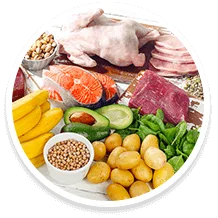
Hair is roughly 90% keratin, a structural protein, so a diet chronically short of protein can show up in the hair over time. You do not need an unusual amount — you need a reliable source at each meal. Eggs are a standout because they pair complete protein with biotin; fish and poultry deliver protein alongside zinc and B-vitamins; and plant eaters can lean on beans, lentils, tofu, tempeh and Greek yoghurt.
Prioritise iron and zinc
Two minerals come up again and again in hair nutrition: iron and zinc. Both are commonly low in people who notice changes in their hair, which is why iron- and zinc-rich foods deserve a regular place on your plate. Good sources of iron include red meat, shellfish, lentils, tofu and dark leafy greens; zinc is plentiful in oysters and other shellfish, beef, pumpkin seeds and chickpeas. A tip worth remembering: pairing plant iron with a vitamin-C food, such as lentils with peppers or spinach with citrus, meaningfully improves how much iron you absorb.
Load up on colourful vegetables and fruit
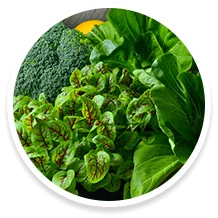
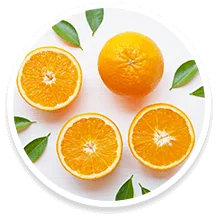
Vegetables and fruit supply the vitamins and antioxidants that support the scalp and protect cells from everyday oxidative stress. Orange and green produce — sweet potato, carrots, spinach, kale — provides the beta-carotene the body converts to vitamin A, which has a recognised role in skin and scalp health. Citrus, berries and peppers deliver vitamin C, needed for the collagen that surrounds the hair follicle and for iron absorption.
| Nutrient | Why hair cares | Everyday foods |
|---|---|---|
| Protein | Keratin building blocks | Eggs, fish, poultry, beans, lentils, yoghurt |
| Iron | Oxygen delivery to follicles | Red meat, shellfish, lentils, spinach, tofu |
| Zinc | Protein synthesis & repair | Oysters, beef, pumpkin seeds, chickpeas |
| Vitamin C | Collagen & iron absorption | Citrus, berries, peppers, kiwi |
| Vitamin A | Skin & scalp health | Sweet potato, carrots, spinach, kale |
| Omega-3 | Scalp comfort & shine | Salmon, sardines, walnuts, flax, chia |
See how Abundant complements your plate →
Don’t forget healthy fats
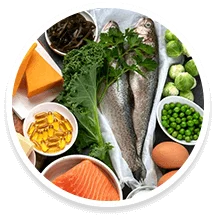
The scalp is skin, and skin likes healthy fats. Omega-3 fatty acids, found in oily fish such as salmon and sardines and in walnuts, flaxseed and chia, are associated with scalp comfort and a healthy shine. Vitamin E, plentiful in almonds, sunflower seeds and avocado, is a fat-soluble antioxidant that partners naturally with these foods. A drizzle of olive oil, a handful of nuts or half an avocado is an easy way to round out a hair-friendly meal.
A sample hair-friendly day
Putting it together is simpler than it sounds. Here is one balanced day that hits the key nutrients without any special shopping:
- Breakfast: two eggs with sauteed spinach and whole-grain toast, plus an orange.
- Lunch: a lentil and chickpea salad with peppers, pumpkin seeds and olive oil.
- Snack: Greek yoghurt with berries and a small handful of almonds or walnuts.
- Dinner: grilled salmon or tofu, sweet potato and a big side of mixed greens.
- Hydration: water and unsweetened tea through the day.
That single day supplies protein at every meal, iron and zinc from several sources, vitamin C to help absorb it, vitamin A from the sweet potato and greens, and omega-3s from the fish or seeds. Repeat that pattern most days and your hair has the raw materials it needs.
Where a supplement fits
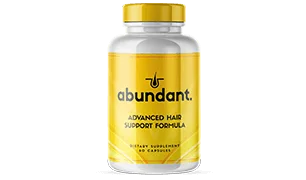
Even a good diet has gaps — busy weeks, travel, fussy appetites or higher needs can all leave a shortfall. That is the sensible role of a supplement: a convenient top-up of the nutrients hair relies on, not a replacement for real food. Abundant is built around exactly this idea, combining biotin, zinc, vitamins A, C and E, pantothenic acid, iodine and selenium with botanicals such as saw palmetto and horsetail in one daily capsule. Think of it as insurance alongside your plate, taken with a meal so the fat-soluble vitamins are well absorbed.
Top up the gaps
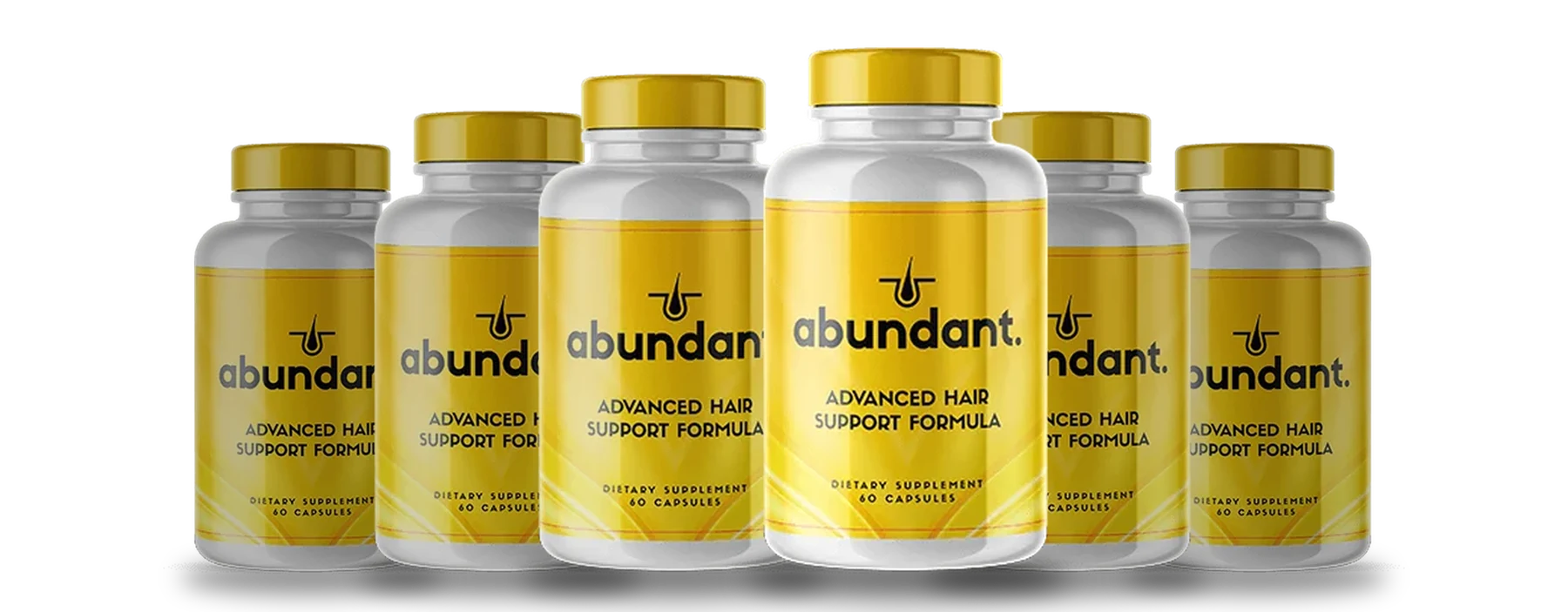
Abundant is a once-daily capsule pairing biotin and zinc with hair-focused vitamins. The six-bottle bundle is the best value at $49 per bottle, with free U.S. shipping and a 60-day guarantee.
Order Abundant — from $49/bottleHabits that help food work harder
Nutrition does not act alone. A few gentle habits let a hair-friendly diet show its best: wash and brush without excessive heat or tension, protect hair from prolonged sun, manage stress and protect your sleep, and stay hydrated. None of these are dramatic, but together they reduce the everyday wear that can undo good nutrition. Pair them with a consistent plate and, if you choose, a daily capsule such as Abundant.
The bottom line
The best foods for healthy hair are the same whole foods that support the rest of you: protein at every meal, iron and zinc from varied sources, colourful produce for vitamins and antioxidants, and healthy fats for the scalp. Build that pattern first. A supplement can top up the gaps, but it works best as a partner to a good plate — not a shortcut around it.
Food does two jobs at once here, and it is worth separating them. It supplies the raw material for the hair shaft, which is the part most articles cover, and it also feeds the skin the follicle sits in — the reason nourishing the scalp naturally belongs in any diet-led plan rather than being treated as a separate cosmetic problem. A plate built for one usually serves the other.
If you want the whole picture rather than a shopping list, the wider case for strengthening hair from within sets these foods alongside sleep, stress and protein timing, which is closer to how nutrition actually reaches a follicle.
Frequently asked questions
What is the single best food for healthy hair?
There is no single magic food. Hair benefits most from an overall pattern that supplies enough protein plus iron, zinc and the key vitamins. If one food deserves a mention it is eggs, which pair complete protein with biotin, but variety across the day matters far more than any one item.
Does eating more protein help hair?
Hair is made largely of the protein keratin, so getting enough protein each day is foundational. Very low-protein diets can affect hair over time. For most people the goal is simply a protein source at each meal rather than an unusually high intake.
Which nutrients matter most for hair?
Protein, iron, zinc and vitamins A, C, D and E are among the most discussed, along with the B-vitamins including biotin. Iron and zinc in particular are linked with hair when they run low, which is why whole foods rich in them feature heavily in a hair-friendly diet.
Can a vegetarian or vegan diet support healthy hair?
Yes, with a little planning. Plant eaters should pay attention to protein, iron, zinc and vitamin B12, combining legumes, whole grains, nuts, seeds and leafy greens, and pairing iron-rich foods with vitamin C to aid absorption.
Do supplements replace a hair-healthy diet?
No. Food is the foundation and supplements are a convenient top-up, not a substitute. A blend such as Abundant is designed to complement a nutrient-rich diet and gentle hair care rather than replace real meals.
How quickly does diet change show in hair?
Hair grows slowly, about a centimetre a month, so dietary changes take weeks to months to reach the visible length. Consistency over several months is what counts, and individual results vary.
Try Abundant risk-free for 60 days →
Abundant is a dietary supplement, not a treatment for any medical condition. These statements have not been evaluated by the Food and Drug Administration. This product is not intended to diagnose, treat, cure or prevent any disease. Always consult a qualified healthcare professional about your individual needs.
References & further reading
- National Institutes of Health, Office of Dietary Supplements. Iron — Fact Sheet for Health Professionals. ods.od.nih.gov/factsheets/Iron-HealthProfessional
- National Institutes of Health, Office of Dietary Supplements. Zinc — Fact Sheet for Health Professionals. ods.od.nih.gov/factsheets/Zinc-HealthProfessional
- National Center for Complementary and Integrative Health (NCCIH). Omega-3 Supplements. nccih.nih.gov/health/omega3-supplements-in-depth
- Guo EL, Katta R. Diet and hair loss: effects of nutrient deficiency and supplement use. Dermatol Pract Concept. 2017. Guo & Katta 2017, Dermatol Pract Concept — PubMed 28243487
These references describe nutrients and foods in general terms and do not constitute evidence that any product treats, cures or prevents any condition.
Keep reading: biotin for hair growth · vitamins and minerals for hair · back to the Abundant blog · homepage.