Pantothenic acid for hair: the vitamin B5 role in Abundant’s daily blend

Updated September 2026 · reviewed by the Abundant Research Team. We are an independent information resource, not a medical provider, and this article is educational rather than medical advice.
Pantothenic acid, better known as vitamin B5, is a water-soluble nutrient the body uses to build coenzyme A and to turn food into usable energy — two jobs that every growing cell, including those in the hair follicle, depends on. This guide explains what B5 really does for hair and scalp, how much you need, where to find it in food, and the honest, evidence-led way a formula like Abundant works it into a daily capsule.
Is pantothenic acid good for your hair?
- What it is
- Vitamin B5, a water-soluble B-vitamin your body uses to make coenzyme A and release energy from food.
- The hair link
- B5 supports the normal energy metabolism follicle cells rely on — a supporting role, not a proven growth cure.
- How much
- About 5 mg a day is adequate for most adults; deficiency is rare because B5 is in almost everything.
- In Abundant
- Included as one nutrient in a broader hair blend with biotin, zinc and hair-focused vitamins.
If there is one honest headline here, it is that vitamin B5 is a quiet team player rather than a miracle ingredient. It rarely runs low, its skin-care cousin panthenol does something different from the dietary vitamin, and no serious source claims a B5 pill regrows hair on its own. What it does do is contribute to the everyday chemistry of healthy cells — and that is exactly why it earns a modest place in a balanced hair formula. For the wider picture, see our companion guide to vitamins and minerals for hair.
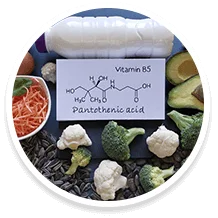
What is pantothenic acid (vitamin B5)?
Pantothenic acid is the chemical name for vitamin B5, one of the eight water-soluble B-vitamins your body needs from food each day. Its most important job is serving as the raw material for coenzyme A, a molecule central to how cells release energy from carbohydrates, fats and protein. Because the body cannot store large amounts of a water-soluble vitamin, a steady dietary supply keeps that machinery running smoothly.
Where does the name come from?
The name is a clue to the vitamin’s biggest practical feature. Pantothenic acid comes from the Greek word pantothen, meaning “from everywhere,” because small amounts appear across such a broad range of foods — meat, eggs, dairy, whole grains, legumes and many vegetables. That ubiquity is why a genuine B5 deficiency is rare in people who eat a varied diet, and why the conversation about B5 for hair is usually about adequacy rather than mega-dosing.
What does vitamin B5 do for hair and scalp?
Vitamin B5 supports hair indirectly, by helping the energy metabolism that dividing follicle cells depend on rather than by acting on the hair shaft itself. Hair is produced by some of the most metabolically active cells in the body, and coenzyme A — which B5 helps build — sits at the centre of the reactions that fuel that activity. In that sense B5 is part of the nutritional baseline for normal hair, in the same supporting cast as the other B-vitamins.
Does B5 actually make hair grow?
Here the evidence deserves plain speaking. There is no robust human trial showing that extra pantothenic acid speeds hair growth in people who are already getting enough, and the marketing that implies otherwise runs ahead of the science. What is fair to say is that a shortfall of any essential nutrient can affect hair over time, so keeping B5 topped up is part of general good nutrition. It is a supporting nutrient for hair you already have, not a treatment for hair loss.
Is B5 the same as the “panthenol” in shampoo?
Panthenol is a stable, alcohol form of pantothenic acid used widely in shampoos and conditioners, and it works in a completely different way from the vitamin you swallow. On the strand, panthenol acts as a humectant and conditioning agent, helping hair hold moisture, feel smoother and look glossier. That is a cosmetic, surface-level benefit measured in how hair behaves, not a nutritional one — a useful distinction when a label leans on the word “pantothenic” to imply more.
How much pantothenic acid do you need each day?
For most adults the adequate intake of pantothenic acid is about 5 mg per day, a figure set by the U.S. National Academies because there is not enough data for a formal recommended dietary allowance. Needs rise slightly during pregnancy and breastfeeding, and are lower for children. Because B5 turns up in so many foods, the amount in a normal diet usually meets these targets without any special effort.
| Life stage | Adequate intake (per day) | Notes |
|---|---|---|
| Adults 19+ | 5 mg | Same target for men and women |
| Pregnancy | 6 mg | Slightly higher demand |
| Breastfeeding | 7 mg | Highest adult target |
| Teens 14–18 | 5 mg | Reaches the adult level |
| Children 4–8 | 3 mg | Scales with age |
Values are the adequate intakes summarised by the NIH Office of Dietary Supplements. There is no established upper limit for pantothenic acid.
What foods are rich in pantothenic acid?
The richest everyday sources of pantothenic acid are organ meats, but the vitamin is also plentiful in eggs, mushrooms, avocado, whole grains, sunflower seeds and legumes. Because heat and processing can reduce the amount in food, less-processed choices tend to deliver more. The table below gives a rough sense of where B5 concentrates so you can spot it on your plate.
| Food | Approx. B5 per serving | Everyday context |
|---|---|---|
| Beef liver | ~8 mg (85 g) | The single richest common source |
| Shiitake mushrooms | ~2.6 mg (per cup) | A top plant source |
| Sunflower seeds | ~2.4 mg (per ¼ cup) | Easy to add to meals |
| Avocado | ~2 mg (whole) | Pairs with healthy fats |
| Egg | ~0.7 mg (one large) | Also supplies biotin |
| Greek yoghurt | ~1.3 mg (per cup) | Protein plus B5 |
Amounts are approximate and vary with variety, portion and preparation.
See the exact dose of B5 in Abundant →
How does Abundant use pantothenic acid?
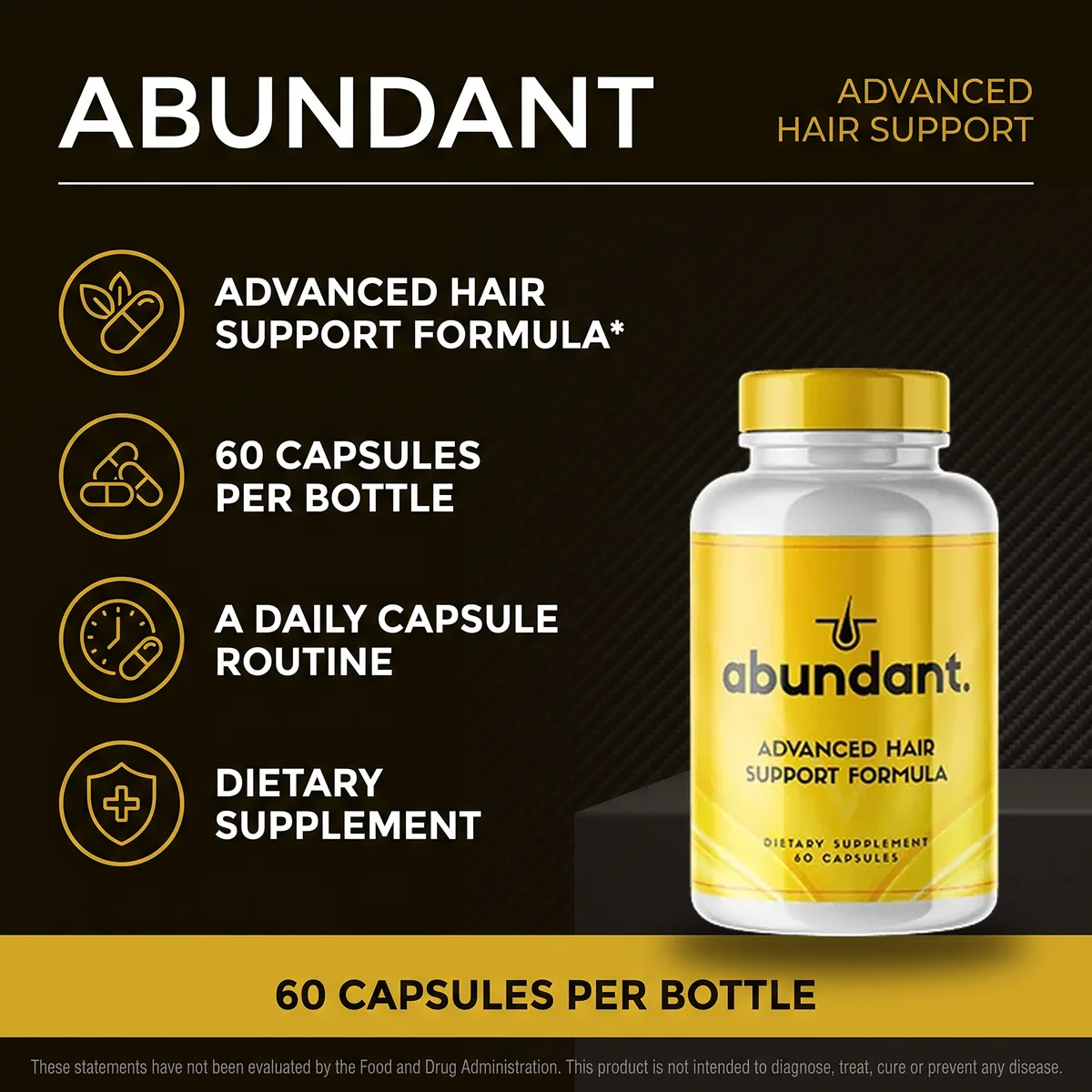
Abundant treats pantothenic acid the way the evidence suggests it should be treated: as one supporting nutrient within a broader hair-focused blend, not as a headline cure. It sits alongside biotin, zinc, iodine, selenium and vitamins A, C and E, plus botanicals such as saw palmetto and horsetail, so the formula covers the everyday nutrient base for normal hair rather than betting everything on a single ingredient. Taken once daily with a meal, the fat-soluble partners are better absorbed.
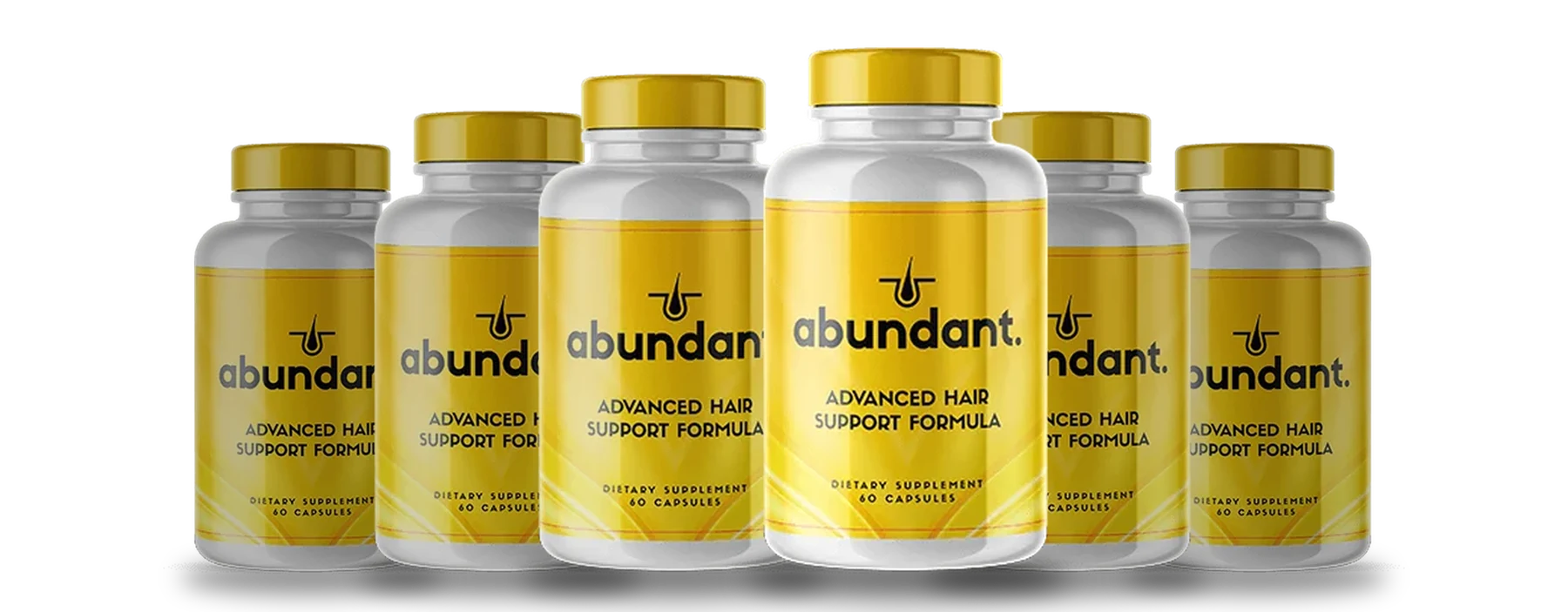
B5 in good company
Abundant is a once-daily capsule pairing pantothenic acid and biotin with zinc and hair-focused vitamins. The six-bottle bundle is the best value at $49 per bottle, with free U.S. shipping and a 60-day guarantee.
Check today’s Abundant pricing — from $49/bottleCan pantothenic acid cause side effects?
Pantothenic acid is water-soluble and generally very well tolerated, with no formal upper intake limit established. Excess is largely excreted in urine rather than stored, which is part of why the vitamin has such a wide safety margin. Very large supplemental doses — far above the few milligrams in a balanced formula — have occasionally been associated with mild digestive upset such as loose stools, so more is not better. As with any supplement, anyone who is pregnant, breastfeeding, taking medication or managing a health condition should check with a qualified professional first.
The bottom line on B5 for hair
Vitamin B5 is a genuinely useful but modest player in hair nutrition: it powers the energy metabolism follicle cells rely on, it is easy to get from food, and it deserves a place in a balanced formula — but it is not a standalone growth treatment, and the panthenol in your conditioner is a separate, cosmetic story. The sensible approach is to eat a varied diet, keep expectations honest, and treat a supplement such as Abundant as a convenient top-up of the nutrient base rather than a shortcut. For a closely related nutrient, read our guide to biotin for hair growth.
B5 sits in the same tier as several trace minerals: clearly necessary, rarely deficient, and heavily marketed. Selenium and what it really does for hair is the sharpest example of that pattern, because it is a nutrient where both too little and too much have been linked to hair changes, and the safe range is narrower than for most B-vitamins.
Frequently asked questions
Is pantothenic acid the same as vitamin B5?
Yes. Pantothenic acid is simply the chemical name for vitamin B5, one of the eight B-vitamins. Its name comes from the Greek pantothen, meaning from everywhere, because small amounts are found across a wide range of foods. In supplements you may also see it as calcium pantothenate or, on the skin-care side, as panthenol.
Does vitamin B5 help hair grow?
There is no strong human evidence that taking extra pantothenic acid makes hair grow faster in people who are not deficient. What B5 reliably does is take part in energy metabolism and in making coenzyme A, processes every growing cell relies on. The honest position is that B5 is a supporting nutrient for normal hair, not a proven growth treatment.
Is the panthenol in shampoo the same thing?
Panthenol is a stable form of pantothenic acid used widely in shampoos and conditioners as a cosmetic conditioning agent. On the hair shaft it is valued for helping hair hold moisture and feel smoother. That is a surface, cosmetic effect and is separate from the dietary role of B5 taken by mouth.
How much pantothenic acid do I need each day?
For most adults the adequate intake set by the U.S. National Academies is about 5 mg per day, rising slightly in pregnancy and breastfeeding. Because B5 is found in so many foods, outright deficiency is rare in people eating a varied diet, and a supplement typically supplies a modest top-up rather than a large dose.
Can you take too much vitamin B5?
Pantothenic acid is water-soluble and generally well tolerated, and no formal upper limit has been set. Very large doses have occasionally been linked with digestive upset such as loose stools. Sticking to the modest amounts found in a balanced formula is sensible, and anyone with a health condition should check with a professional first.
How does Abundant use pantothenic acid?
Abundant includes pantothenic acid as one member of a broader hair-support blend alongside biotin, zinc, iodine, selenium, vitamins A, C and E and botanicals such as saw palmetto and horsetail. It is there as part of the everyday nutrient base for normal hair, not as a standalone treatment, and is taken once daily with a meal.
Try Abundant risk-free for 60 days →
Abundant is a dietary supplement, not a treatment for any medical condition. These statements have not been evaluated by the Food and Drug Administration. This product is not intended to diagnose, treat, cure or prevent any disease. Always consult a qualified healthcare professional about your individual needs.
References & further reading
- National Institutes of Health, Office of Dietary Supplements. Pantothenic Acid — Fact Sheet for Health Professionals. ods.od.nih.gov/factsheets/PantothenicAcid-HealthProfessional
- National Library of Medicine, MedlinePlus. Pantothenic acid (vitamin B5). medlineplus.gov/ency/article/002410.htm
- Ghosh SK, Bandyopadhyay D, Panja S. B vitamins in dermatology. Clin Dermatol. 2026. Ghosh et al. 2026, Clin Dermatol — PubMed 41692080
- National Center for Complementary and Integrative Health (NCCIH). Vitamins and Minerals. nccih.nih.gov/health/vitamins-and-minerals
These references describe pantothenic acid in general terms and do not constitute evidence that any product treats, cures or prevents any condition.
Keep reading: biotin for hair growth · vitamins and minerals for hair · back to the Abundant blog · homepage.