How to choose a hair supplement: the Abundant buyer’s checklist

Updated September 2026 · reviewed by the Abundant Research Team. We are an independent information resource, not a medical provider, and this article is educational rather than medical advice.
Choosing a hair supplement comes down to reading the label against a short checklist rather than trusting the promises on the front: look for named ingredients at disclosed doses, honest transparency, a format you will actually take, sound manufacturing and a guarantee long enough to judge results. Most hair vitamins fail on transparency or dosing, not on their list of nutrients. This guide walks through what to look for, where the evidence is strong and where it is thin, and how the Abundant daily capsule measures against each point.
How to choose a hair supplement — the honest checklist.
- Read the panel
- Every active named with an exact dose — no hidden proprietary blend.
- Right ingredients
- Biotin, zinc, selenium, iodine and hair-focused vitamins at sensible amounts, not megadoses.
- Safe manufacturing
- Made in a GMP-registered facility, with clear allergen and sourcing information.
- Fair guarantee
- Around 60 days or more, so you have time to judge results on hair’s slow timeline.
The hair-supplement aisle rewards confident marketing far more than it rewards good formulation, which is why picking one can feel like guesswork. A clear checklist fixes that: instead of comparing brand stories, you compare the same handful of facts on every label and let the weakest link decide. The point of a buyer guide is not to crown a single winner but to give you a repeatable way to separate a serious formula from an attractive bottle. For the underlying nutrient science, see our companion guide to vitamins and minerals for hair.
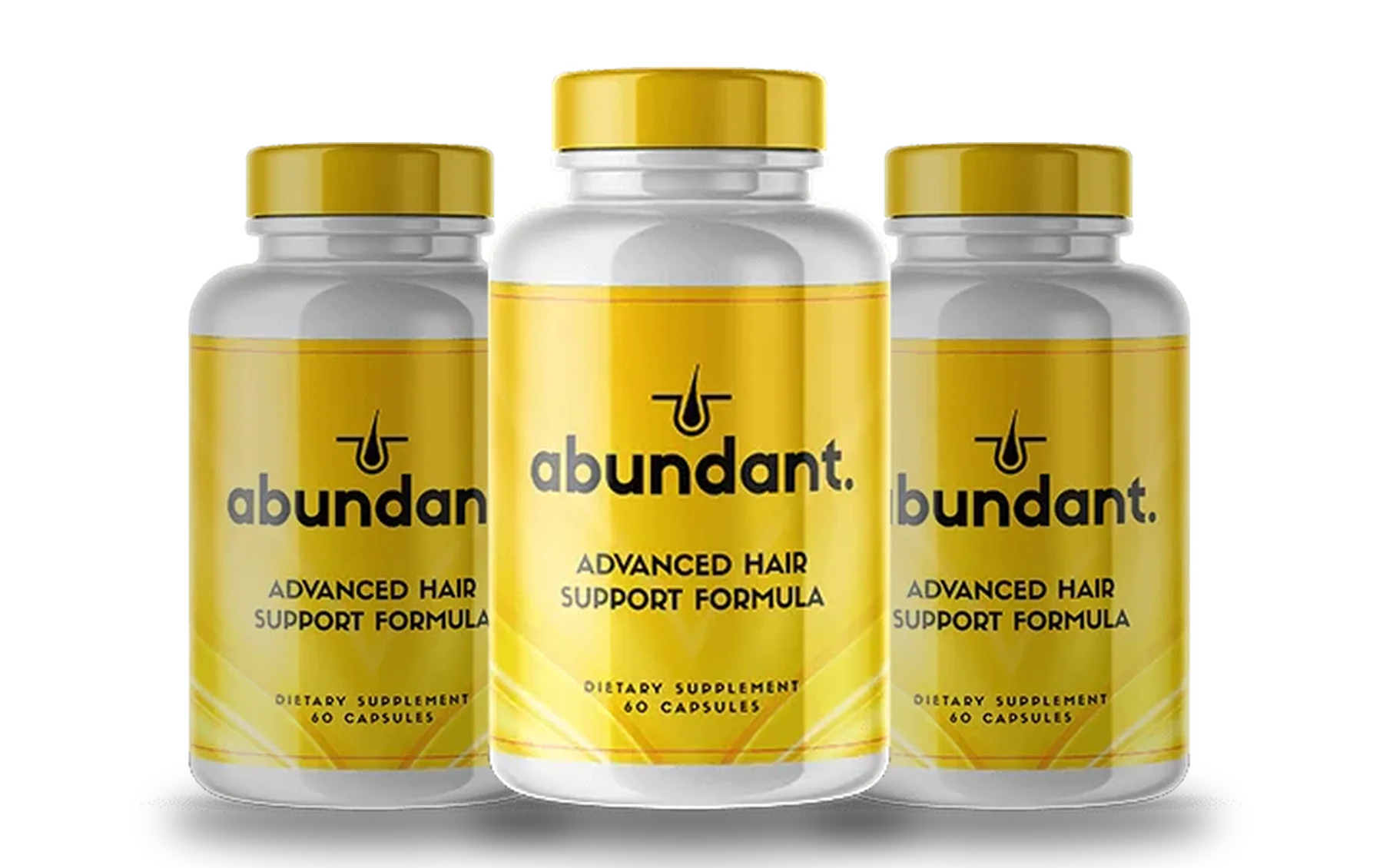
What should you look for first in a hair supplement?
The first thing to look for in a hair supplement is a fully disclosed ingredient panel that names every active and its exact amount, because a formula you cannot see is a formula you cannot judge. Before comparing prices or reading reviews, turn the bottle over and check that each nutrient has a number beside it. If the label hides its doses inside a blend, no amount of marketing detail can tell you whether the useful ingredients are present at a level that matters. Transparency is the gate every other criterion has to pass through first.
Why does the dose matter more than the ingredient list?
The dose matters more than the ingredient list because the right nutrients at token amounts do almost nothing, and a long panel of “pixie-dusted” ingredients is a common trick. Two bottles can share an identical list of biotin, zinc and vitamin C, yet one delivers meaningful amounts while the other includes just enough to print the name. Reading the numbers, not the roster, is what separates a real formula from a label built to impress. A short list at honest doses beats a long list at trace levels every time.
What is a proprietary blend, and should it worry you?
A proprietary blend is a group of ingredients listed under one combined weight without disclosing how much of each you get, and it is a reason for caution. It lets a maker claim a fashionable ingredient while hiding whether it is present at a working dose or a sprinkle. There are legitimate flavour and formulation reasons for blends, but for a hair supplement you are buying for its nutrients, a fully itemised panel is far more trustworthy. When in doubt, prefer the label that tells you everything.
Which ingredients actually belong in a hair supplement?
The ingredients that actually belong in a hair supplement are the nutrients follicles genuinely depend on: biotin, zinc, selenium, iodine, iron where a test shows a shortfall, and vitamins A, C and E in sensible amounts. The strongest evidence is for correcting a genuine deficiency, since a follicle short on a key nutrient cannot build hair well until the gap is filled. Beyond that, balanced support at reasonable levels is a fair goal, while single-nutrient megadoses mostly add cost and, in a few cases, risk. Match the panel to the evidence, not to the marketing.
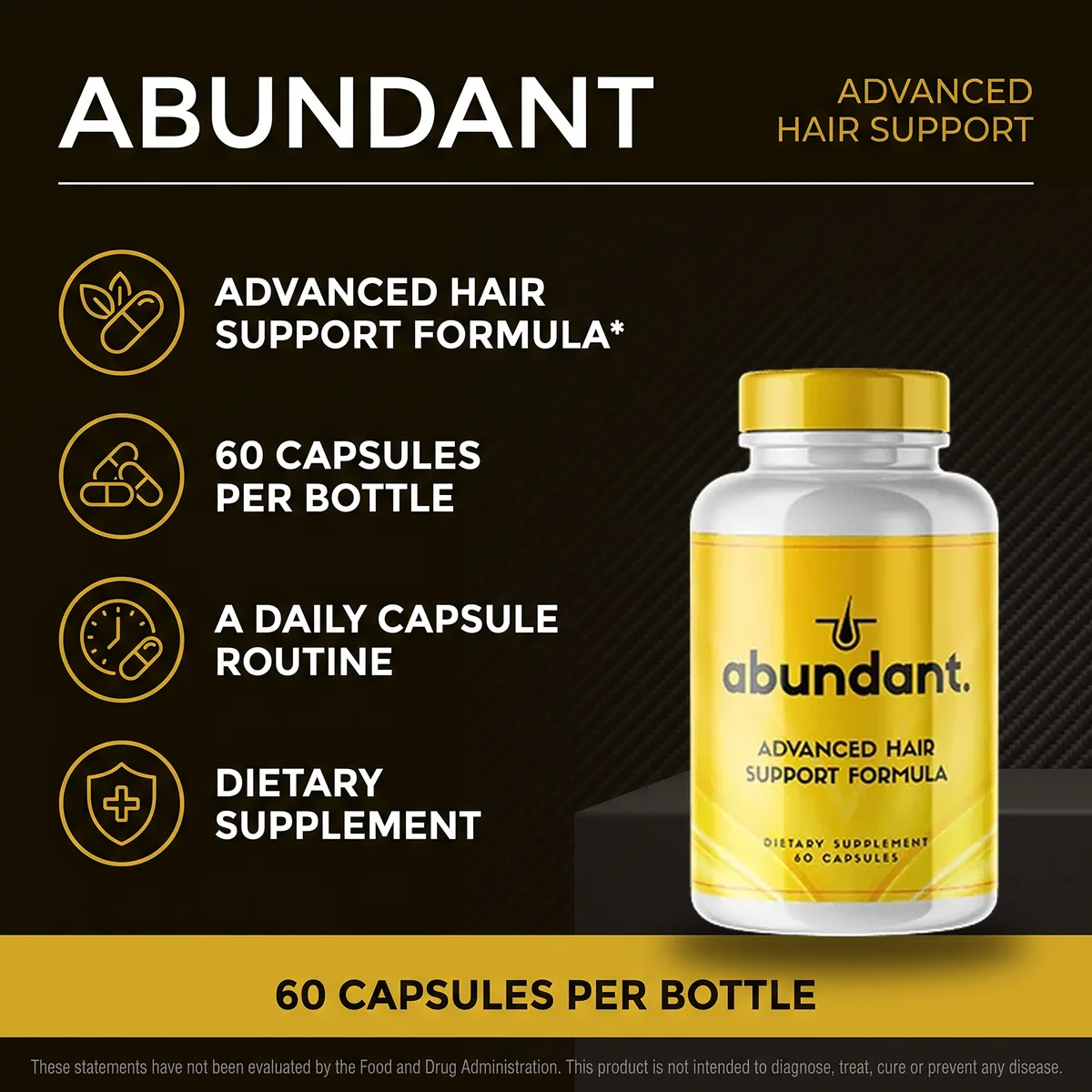
Are more ingredients always better?
More ingredients are not always better, because a crowded label often means each active is present in a smaller amount. A focused formula built around the handful of nutrients with real follicle relevance is usually more honest than a bottle boasting forty exotic extracts. Extra botanicals can be pleasant additions, but they should not crowd out meaningful doses of the core nutrients that do the work. Judge a hair supplement by the strength of its essentials, not the length of its ingredient list.
| Ingredient | Why it is on the checklist | Evidence strength |
|---|---|---|
| Biotin | Supports keratin production | Clear when deficient |
| Zinc | Follicle function & repair | Clear when deficient |
| Iron (if low) | Common factor in shedding | Strong when tested low |
| Selenium & iodine | Thyroid & follicle support | Moderate / supportive |
| Vitamins A, C, E | Scalp & antioxidant support | Supportive at sensible doses |
See the exact dose in Abundant →
How do you judge transparency and manufacturing quality?
You judge transparency and manufacturing quality by looking for a GMP-registered facility, a country of manufacture, clear allergen labelling and honest sourcing information on the bottle or website. Good Manufacturing Practice signals that a third-party standard governs how the product is made, which matters because supplements are less tightly regulated than medicines. A brand willing to state where and how it manufactures, and to list what its product is free from, is showing the kind of openness that separates a considered formula from a white-label bottle. Absence of that information is itself a data point.

What safety signals should be on the label?
The safety signals worth checking are a GMP or made-in-USA statement, allergen and free-from labelling, a sensible serving size, and no disease or cure claims anywhere on the packaging. A responsible hair supplement describes nutritional support, not treatment, and it will carry the standard note that its statements are not evaluated by the Food and Drug Administration. Loud promises to “cure” hair loss are a warning sign, not a selling point. Honest limits are a mark of a trustworthy product, not a weakness.
How do format and adherence factor in?
Format factors in mainly through adherence and dose honesty: the best format is the one you will genuinely take every day, but a pleasant format should not quietly shrink the doses that matter. Capsules usually carry a full nutrient panel and are easy to take with a meal, which helps fat-soluble vitamins absorb, while gummies often trade dose for taste and add sugar. Choose the format that fits your routine, then confirm it has not sacrificed the amounts on the panel to be palatable. Consistency, not novelty, is what turns a supplement into results.
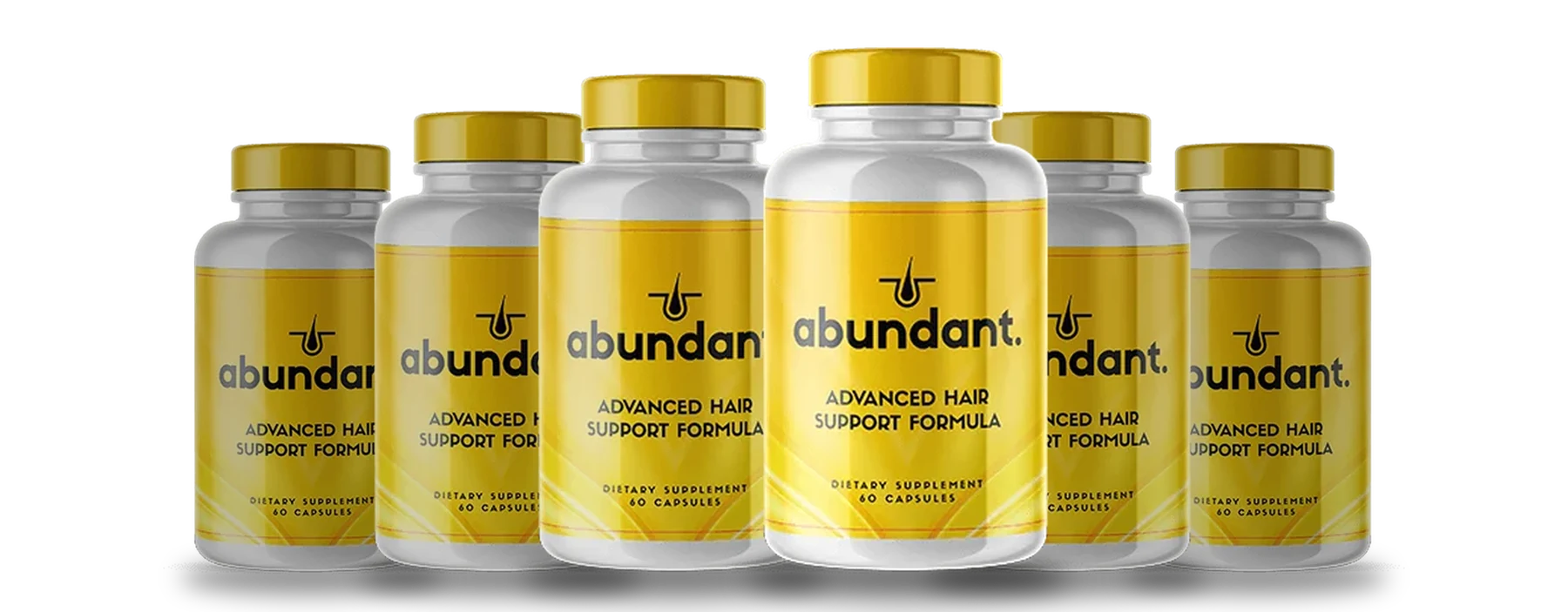
A formula that meets the checklist
Abundant discloses every active at its dose, is made in the USA in a GMP-registered facility, and is backed by a 60-day guarantee. The six-bottle bundle is the best value at $49 per bottle, with free U.S. shipping so you can trial it on hair’s real timeline.
Check today’s Abundant pricing — from $49/bottleWhy does the guarantee and value matter?
The guarantee matters because hair grows slowly, so you need a return window long enough to judge results before it closes rather than a policy measured in a few rushed weeks. Visible change from any nutritional support takes roughly three to six months of consistency, which means a 60-day-or-longer guarantee is the sign of a maker who expects you to trial the product properly. Value follows the same logic: the cheapest bottle is a false economy if its doses are too low to do anything, and the honest comparison is cost per meaningful dose, not cost per bottle.
How long before a hair supplement can be fairly judged?
A hair supplement can only be fairly judged after about three to six months, because that is how long hair’s growth cycle takes to show a nutritional change. Hair grows roughly a centimetre a month, so any real difference in density or strength appears over a season, not a fortnight. Anyone promising visible regrowth in days is selling a timeline that biology does not support. Patience and consistency are part of the product, which is exactly why the guarantee length is a buying criterion and not an afterthought.
How does Abundant measure against the checklist?
Abundant is built to pass the checklist point by point: it is a fully disclosed once-daily capsule of biotin, zinc, iodine, selenium, pantothenic acid and vitamins A, C and E with supporting botanicals, made in the USA in a GMP-registered facility and backed by a 60-day guarantee. It states its doses rather than hiding them in a blend, it describes nutritional support rather than making disease claims, and it uses a simple capsule format designed to be taken with a meal for absorption. You can read the full formula on the Abundant product page and check every number for yourself.
| Checklist point | What to look for | Abundant |
|---|---|---|
| Transparency | Every active dosed, no hidden blend | Fully disclosed panel |
| Ingredients | Hair-focused nutrients, sensible doses | Biotin, zinc, selenium, iodine, A/C/E |
| Format | Easy to take daily, full dose kept | One capsule with a meal |
| Manufacturing | GMP-registered, made in a named country | GMP-registered, made in USA |
| Guarantee | Long enough to judge results | 60-day money-back |
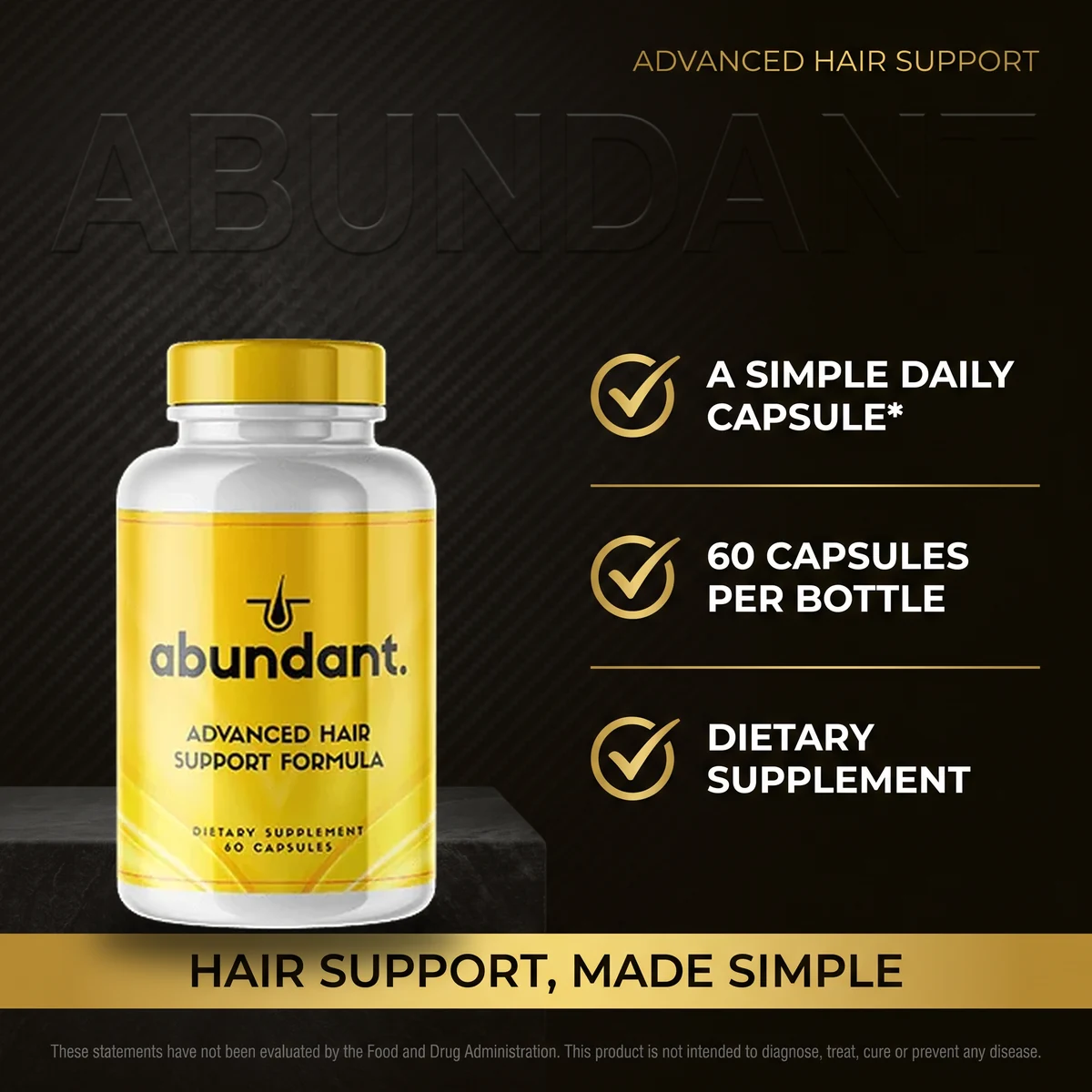
What Abundant deliberately does not claim
Abundant deliberately does not claim to cure, treat or reverse hair loss, because that would be both dishonest and outside what a nutritional supplement can promise. It supports the follicle from within by supplying nutrients hair uses, and it works best for someone filling a genuine gap rather than as a switch that turns growth on. If your hair is noticeably thinning, the honest first step is a professional assessment, since thinning has many causes and the right response depends on the reason. For where to start on that, see our related guide to how to reduce hair shedding naturally.
The bottom line on choosing a hair supplement
The bottom line is that a good hair supplement is chosen with a checklist, not a slogan: disclosed doses first, sensible hair-focused ingredients second, then format, manufacturing and a fair guarantee. Run any bottle through those five points and the weakest link tells you what you need to know, no marketing required. That is exactly how Abundant is built to be read — a transparent, GMP-made daily capsule that states its formula and stands behind it for 60 days. Pick with the checklist, give it a season, and let the label rather than the front of the bottle decide.
Choosing well is the second question, though. The first is whether to buy anything at all, and that depends on your diet, the cause of the change you are seeing and how long you are willing to give it — the cost-benefit case is set out in whether hair vitamins are worth it, and it is worth reading before you compare labels rather than after.
Frequently asked questions
What is the single most important thing to look for in a hair supplement?
The most important thing is a fully disclosed ingredient panel that names every active, its exact amount, and no hidden proprietary blend. A supplement can only be judged if you can see the doses, because the right nutrients at token amounts do little. Everything else on the checklist — format, price, guarantee — matters only after transparency is confirmed.
Which ingredients actually belong in a hair supplement?
The best-supported ingredients are the nutrients hair follicles genuinely rely on: biotin, zinc, iron where testing shows a shortfall, selenium, iodine, and vitamins A, C and E in sensible amounts. Correcting a real deficiency has the clearest evidence, while very high single-nutrient megadoses add cost without added benefit and can carry risk. Look for a balanced blend at reasonable levels rather than a headline dose of one flashy ingredient.
Are proprietary blends a red flag on a hair supplement label?
A proprietary blend is a caution sign because it lists a combined weight without telling you how much of each ingredient you are getting. That makes it impossible to know whether a useful nutrient is present at a meaningful dose or only as a sprinkle for the label. A trustworthy hair supplement discloses each active and its amount, so you can compare it fairly against the evidence.
Does the supplement format — capsule, gummy or powder — matter?
Format matters mainly for adherence and dose honesty. A capsule usually carries a full nutrient panel and is easy to take with a meal, which helps fat-soluble vitamins absorb, while gummies often sacrifice dose and add sugar to taste good. The best format is the one you will actually take every day, but check that a pleasant format has not quietly reduced the amounts that matter.
How important is a money-back guarantee when choosing a hair supplement?
A generous guarantee matters because hair works on a slow timeline, so you need enough time to judge results before the window closes. Since visible change takes roughly three to six months of consistency, a return policy measured in weeks is not much use. A guarantee of around 60 days or more signals that the maker expects you to trial the product properly rather than rush a verdict.
How does Abundant measure against a hair-supplement checklist?
Abundant is built to meet the checklist: a fully disclosed once-daily capsule of biotin, zinc, iodine, selenium, pantothenic acid and vitamins A, C and E with supporting botanicals, made in the USA in a GMP-registered facility and backed by a 60-day guarantee. It is a nutritional support supplement, not a treatment for hair loss, and it makes no disease claims. It is designed to be the simple, transparent inside-out layer of a sensible routine.
Try Abundant risk-free for 60 days →
Abundant is a dietary supplement, not a treatment for any medical condition. These statements have not been evaluated by the Food and Drug Administration. This product is not intended to diagnose, treat, cure or prevent any disease. Always consult a qualified healthcare professional about your individual needs.
References & further reading
- National Institutes of Health, Office of Dietary Supplements. Biotin — Fact Sheet for Health Professionals. ods.od.nih.gov/factsheets/Biotin-HealthProfessional
- National Institutes of Health, Office of Dietary Supplements. Zinc — Fact Sheet for Health Professionals. ods.od.nih.gov/factsheets/Zinc-HealthProfessional
- U.S. National Library of Medicine / PubMed. The role of vitamins and minerals in hair loss — a review. pubmed.ncbi.nlm.nih.gov/30547302
- National Center for Complementary and Integrative Health (NCCIH). Dietary and Herbal Supplements — safety and evidence. nccih.nih.gov/health/dietary-and-herbal-supplements
- U.S. Food and Drug Administration. Dietary Supplements — what you need to know. fda.gov/food/dietary-supplements
- Mayo Clinic. Hair loss — symptoms, causes and treatment. mayoclinic.org/diseases-conditions/hair-loss
These references describe ingredients, nutrients and general hair care and do not constitute evidence that any product treats, cures or prevents any condition.
Keep reading: vitamins and minerals for hair · biotin for hair growth · hair supplements vs serums · back to the Abundant blog · homepage.