How to get thicker hair naturally: the Abundant everyday guide

Updated September 2026 · reviewed by the Abundant Research Team. We are an independent information resource, not a medical provider, and this article is educational rather than medical advice.
Getting thicker hair naturally means protecting the strands you already grow and feeding the follicles that grow them — not chasing a quick fix. Real fullness comes from three everyday layers working together: a nutrient-rich diet, gentle styling that limits breakage, and a well-cared-for scalp. This guide walks through each one in plain terms, and shows where a once-daily capsule like Abundant fits as the nutrition layer alongside good food.
How to get thicker, fuller-looking hair naturally.
- Feed the follicle
- Enough protein plus iron, zinc, biotin and vitamins A, C and E from varied whole foods.
- Style gently
- Lower the heat, loosen tight styles and detangle carefully to stop everyday breakage.
- Care for the scalp
- Keep the scalp clean and comfortable — healthy skin is where healthy hair starts.
- Be patient
- Hair grows about a centimetre a month, so give any routine three to four months.
There is no overnight route to thicker hair, but there is a dependable one. Below we break the process into the habits that move the needle, backed by the nutrients hair is built from. For the nutrient story in more depth, see our companion guide to vitamins and minerals for hair.

What does “thicker hair” actually mean?
Thicker hair really describes two different things: the width of each individual strand, and the overall density of strands on your head. Strand width is largely set by genetics and cannot be permanently changed by habits alone, but density — how full your hair looks — depends on how many strands you keep and how healthy their follicles are. That distinction matters, because the natural levers you can actually pull work on density and condition, not on rewriting the strand you are built to grow. When people say a routine gave them thicker hair, they usually mean it looks fuller: less breakage at the ends and more strands reaching full length.
Can you really thicken hair naturally?
Yes, within honest limits — you can improve how thick and full your hair looks, even though you cannot change the genetic width of each strand. The two most powerful natural levers are reducing breakage and supporting the follicle with good nutrition, and both are within everyday reach. It is worth being clear on the evidence: there is solid support for the idea that correcting a nutrient shortfall, particularly iron or zinc, helps hair affected by that shortfall, but far less that piling extra nutrients onto an already well-nourished body does more. So the realistic promise is this: fix the gaps, stop the damage, and give it time.

How do you feed the follicle for fuller hair?
You feed the follicle by eating a varied, whole-food diet that reliably supplies protein plus the minerals and vitamins hair is built from. Hair is roughly 90% keratin, so a diet chronically short of protein can show up in the hair over time; a protein source at each meal is the foundation. On top of that, iron and zinc come up again and again in hair nutrition because they are commonly low in people who notice changes in their hair. Vitamins A, C and E round out the picture, supporting the scalp and the collagen around each follicle.
| Nutrient | Why thickness cares | Everyday foods |
|---|---|---|
| Protein | Keratin building blocks for every strand | Eggs, fish, poultry, beans, lentils, yoghurt |
| Iron | Oxygen delivery to active follicles | Red meat, shellfish, lentils, spinach, tofu |
| Zinc | Protein synthesis & follicle repair | Oysters, beef, pumpkin seeds, chickpeas |
| Biotin | Keratin metabolism (helps if low) | Eggs, nuts, seeds, sweet potato |
| Vitamin C | Collagen & better iron absorption | Citrus, berries, peppers, kiwi |
| Vitamins A & E | Scalp health & antioxidant support | Sweet potato, carrots, almonds, avocado |
The practical takeaway is variety, not perfection. Build most plates around a protein, a colourful vegetable and a source of healthy fat, and pair plant iron with a vitamin-C food — lentils with peppers, spinach with citrus — to absorb more of it. For the full menu, see our guide to the best foods for healthy hair. Where busy weeks leave gaps, a daily capsule can top them up — exactly where Abundant is designed to sit.
See the exact dose in Abundant →
Which styling habits stop hair looking thin?
The single biggest natural win for fuller-looking hair is cutting everyday breakage, because a large share of thinning at the ends is damage rather than shedding. Keeping the length you already grow makes hair look denser without waiting on new growth. The habits below are simple, but together they quietly protect months of growth.
Does heat styling really matter?
Yes — repeated high heat is one of the most common causes of avoidable breakage. Use the lowest heat that gets the job done, always apply a heat protectant first, and give hair regular heat-free days. Air-drying most of the way before a quick finish spares the strand a great deal of stress.
Are tight styles a problem?
Persistent tension from tight ponytails, buns and braids pulls on the hairline and can weaken it over time. Loosen up, vary where you place ties, and choose soft, snag-free bands. Wet hair is at its most fragile, so detangle gently with a wide-tooth comb from the ends upward, not from the roots.

How does scalp care affect hair thickness?
The scalp is skin, and healthy hair grows from healthy skin — so a clean, comfortable, well-circulated scalp is a genuine part of getting fuller hair. Keep the scalp clean without stripping it: wash to your own oiliness rather than to a rule, and rinse thoroughly. A gentle few-minute scalp massage while you shampoo feels good and encourages blood flow to the follicles. If persistent flaking, itching or redness will not settle, that is worth a conversation with a professional. None of this is dramatic, but an irritated scalp can quietly undo good nutrition and careful styling.
Where does Abundant fit into a thicker-hair routine?
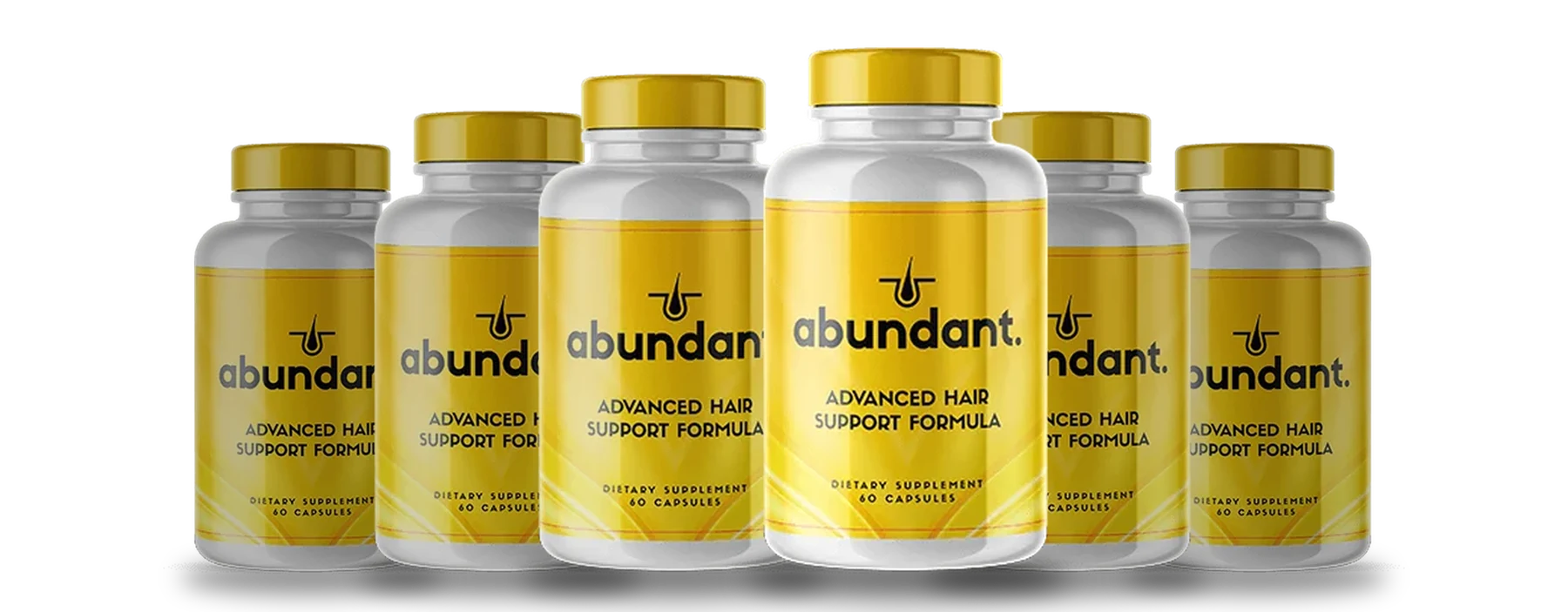
Abundant fits as the nutrition layer — a once-daily capsule that tops up the nutrients hair relies on when your plate falls short, not a replacement for real food or a treatment for any condition. Even a good diet has gaps on busy weeks, and that is the sensible role of a supplement. Abundant combines biotin, zinc, iodine, selenium and vitamins A, C and E with botanicals such as saw palmetto and horsetail in one capsule taken with a meal, so the fat-soluble vitamins are well absorbed. Think of it as insurance alongside the habits above, not a shortcut around them.
Make the nutrition layer effortless
Abundant pairs biotin and zinc with hair-focused vitamins and botanicals in one daily capsule. The six-bottle bundle is the best value at $49 per bottle, with free U.S. shipping and a 60-day guarantee.
Check today’s Abundant pricing — from $49/bottleWhat does a simple four-week routine look like?
A workable routine layers nutrition, gentle styling and scalp care into habits you barely notice — here is one way to build it up over a month so nothing feels like a chore.
| Week | Focus | Simple actions |
|---|---|---|
| Week 1 | Feed the follicle | Protein at each meal; add a daily capsule such as Abundant with food |
| Week 2 | Cut the heat | Two heat-free days; heat protectant every time; lower the tool temperature |
| Week 3 | Ease the tension | Looser styles, soft bands, wide-tooth comb from the ends up |
| Week 4 | Mind the scalp | Gentle wash to your oiliness; a short scalp massage; manage stress and sleep |
By the end of the month none of these is a special effort — they are just how you handle your hair. Keep them running together and, crucially, keep going: the payoff shows over three to four months, not three to four days.
The bottom line
Getting thicker hair naturally is less about one miracle and more about three ordinary layers done consistently: feed the follicle, style gently to keep the length you already grow, and care for the scalp that grows it. Correct the gaps, stop the damage, and give it time. A daily capsule such as Abundant can make the nutrition layer effortless, but it works best as a partner to good food and gentle care — not a replacement.
Thickness is partly a scalp story, because a follicle sits in skin and depends on the blood supply reaching it. That makes nourishing the scalp naturally a practical part of the same routine rather than an optional extra, and it is the half of the plan most people skip.
It is also worth being honest about direction of travel. Hair that is getting thinner and hair that was always fine are different problems, and identifying what actually causes hair thinning tells you whether a natural routine is the right tool or whether a doctor is.
Frequently asked questions
Can you actually make hair thicker naturally?
You can meaningfully improve how thick and full your hair looks by protecting the strands you already have and giving follicles the nutrients they rely on. Natural habits will not change the width you are genetically able to grow, but reducing breakage, caring for the scalp and eating well can make a visible difference over months.
How long does it take to get thicker-looking hair?
Hair grows roughly a centimetre a month, so any approach that works through the follicle takes weeks to months to show. Give a consistent routine at least three to four months before judging it, and remember that reduced breakage can improve fullness a little sooner than new growth does.
Which nutrients matter most for hair thickness?
Protein is foundational because hair is built from keratin, and iron, zinc, biotin and vitamins A, C and E are among the most discussed. Iron and zinc in particular are linked with hair when they run low, which is why a varied, nutrient-rich diet is the first place to look.
Does washing less make hair thicker?
Washing less does not grow thicker hair, but gentler handling reduces breakage, and unwashed roots can look fuller in the short term. The useful habits are low heat, loose styles and a soft touch when hair is wet, which is when strands are most fragile.
What does Abundant do for hair thickness?
Abundant is a once-daily capsule that supplies biotin, zinc, iodine, selenium and vitamins A, C and E alongside botanicals such as saw palmetto and horsetail. It is designed to top up the nutrients hair relies on as part of a healthy diet and gentle care, not to treat any condition.
Can gentle styling really change how full hair looks?
Yes. A large share of everyday thinning at the ends is breakage rather than shedding, so lowering heat, loosening tight styles and detangling carefully can visibly improve density over a few months by keeping the length you already grow.
Try Abundant risk-free for 60 days →
Abundant is a dietary supplement, not a treatment for any medical condition. These statements have not been evaluated by the Food and Drug Administration. This product is not intended to diagnose, treat, cure or prevent any disease. Always consult a qualified healthcare professional about your individual needs.
References & further reading
- National Institutes of Health, Office of Dietary Supplements. Biotin — Fact Sheet for Health Professionals. ods.od.nih.gov/factsheets/Biotin-HealthProfessional
- National Institutes of Health, Office of Dietary Supplements. Iron — Fact Sheet for Health Professionals. ods.od.nih.gov/factsheets/Iron-HealthProfessional
- National Institutes of Health, Office of Dietary Supplements. Zinc — Fact Sheet for Health Professionals. ods.od.nih.gov/factsheets/Zinc-HealthProfessional
- Mayo Clinic. Hair loss — Symptoms & causes. mayoclinic.org/diseases-conditions/hair-loss
- Guo EL, Katta R. Diet and hair loss: effects of nutrient deficiency and supplement use. Dermatol Pract Concept. 2017. Guo & Katta 2017, Dermatol Pract Concept — PubMed 28243487
These references describe nutrients, habits and hair in general terms and do not constitute evidence that any product treats, cures or prevents any condition.
Keep reading: biotin for hair growth · best foods for healthy hair · the Abundant review · back to the Abundant blog.